

Seven years of footballing uncertainty have passed since February 18, 2006, since the Leopards (formerly known as Simbas) last set foot on the pitch of an AFCON tournament. The Leopards’ last appearance at the AFCON was in 2006 in Egypt, where the then “Simbas” were eliminated in the quarterfinals by the Egypt’s Pharaohs – the eventual winners. The national team had missed three Africa Cup of Nations tournaments: 2008 in Ghana, 2010 in Angola, 2012 in Gabon and in Equatorial Guinea when the two countries co-hosted. Finally, in 2013 the DRC qualified for the AFCON finals after this drought. The 2013 edition was hosted by South Africa. Meanwhile, the Leopards A had won the inaugural trophy of the African Nations Championship (CHAN) in 2009 in Ivory Coast. CHAN is a competition that brings together national teams from CAF member countries, in which only players playing in their domestic leagues were eligible – impossible to play in Burundi, Gabon, Germany, Belgium, Turkey, or South Africa and hope to be selected by the DRC for CHAN. Since then, voices have been raised in support of critics who (still) express their astonishment that a competition concerning Africans is not flexible enough to allow players based on the continent to play for their national teams, simply because they do not play in their domestic leagues. This practice leads to the contradiction of CAF saying one thing and its opposite at the same time. How can they promote African football when they apply a form of football segregation that excludes some of the continent’s sons simply because they don’t play football in their countries of origin, but rather in African countries? It would never be unfair for players from national teams in question, who play in Africa, to be allowed to participate in the CHAN. There could be no better time to reverse this trend than now.
The increasingly burdensome schedules for African players based in the West were a central topic of discussion between CAF, UEFA, and FIFA. Often, the Africa Cup of Nations (AFCON) took place in the same year as the European Championship (Euro), and the same was true for the World Cup. For example, the 2008 AFCON was held the same year as the European Championship in Switzerland and Austria, the 2010 AFCON the same year as the World Cup in South Africa, and the 2012 AFCON the same year as the European Championship in Ukraine and Poland. It was therefore deemed necessary to change the timing of the Africa Cup of Nations (AFCON) to reach the largest possible audience, both spectators and television viewers, rather than forcing them to choose between attending the AFCON at the beginning of the year or watching something elsewhere, such as the European Championship or the World Cup in June and July. Harmonizing these competitions’ hosting required the change of AFCON hosting year from the Confederation of African Football (CAF). Therefore CAF was convinced to move from even-numbered years to odd-numbered years, thus justifying the AFCON hosting in 2013, 12 months after the 2012 edition in Gabon and in Equatorial Guinea. From then on, AFCON finals would be held in odd-numbered years, resulting in the 2013 edition being the first in line with the implementation of such change. Nevertheless, Western leagues and championships remain unhappy that their African players leave their clubs at crucial time of domestic competitions to represent their national teams at the Africa Cup of Nations (AFCON). They advocate for the AFCON taking place at the end of the league and championship seasons, in May or June. However, the uneven climate in Africa makes this approach impractical. Rainfall and other weather environmental happenstances do vary across countries and regions; in the absence of a compromise that meets with everyone’s approval, January and February remain the months with the least rainfall. Furthermore, these months coincide with the winter break in most leagues and championships elsewhere, allowing selected African players to be present at the AFCON during this period. In England, however, the EPL (English Premier League) does not observe a winter break. Clubs are terrified at the prospect of releasing their best African players to their home countries’ national teams, because of the Africa Cup of Nations. Such a loss is a major headache for coaches and club administrators, who must scramble in the transfer market to offset these absences — a costly and financially draining exercise.

2013 Africa Cup of Nations was an opportunity for the Leopards to bounce back after having had four different coaches since 2006: Claude Le Roy (2004-2006); Henri Depireux (2006-2007); Patrice Neveu (2008-2010); and Robert Nouzaret (2010-2011). Following Nouzaret’s dismissal, Claude Le Roy returned to the helm of the national team and successfully secured the Leopards’ qualification for South Africa. In the qualifiers, they cruised to victory, crushing the Seychelles 7-0 on aggregate before defeating Equatorial Guinea 4-0 in the first leg. In South Africa for this Africa Cup of Nations, DRC’s Leopards were considered underdogs in Group B alongside the Eagles of Mali, the Black Stars of Ghana, and the Mena of Niger. Their sole objective: to advance past the first round. Kidiaba, Kimuaki, Mongungu, Mabiala, Mpeko, Makiadi, Mulumbu, Zola, Mputu, Mbokani, and LuaLua were all part of this crusade, which sometimes seemed adrift. Facing the Black Stars in their opening game, the Leopards drew 2-2 at the Nelson Mandela Bay Stadium in Port Elizabeth on January 20, 2013. Also at the same stadium, the Mena of Niger held the Leopards to a draw on January 24, 2013. For the final group match, the Leopards faced Mali, led by the ever-reliable Seydou Keita, at the Moses Mabhida Stadium in Durban. Mbokani opened the scoring in the 3rd minute before Samassa equalized for Mali 11 minutes later. At this South African’s AFCON, Mbokani scored twice from the penalty spot, against Ghana in the first match and against Mali in the third. DRC recorded their third draw and were eliminated without having lost, while Niger left South Africa without scoring.
Trésor Mputu Mabi was expected to do marvellously well folowing his major blunder in the 2006 edition, which earned him a red card and ended his participation in the Egyptian AFCON. Coach Claude Le Roy constantly praised the undeniable talent of his protégé, declaring that he couldn’t field a team without Trésor Mputu. He was so convinced by the impact of this talented player that the entire team was dependent on him. Alas! He couldn’t prevent the Leopards’ ship from capsizing; the TP Mazembe striker was the best player on the continent. A playmaker, creator, and goalscorer (the all-time top scorer in the African Champions League with 41 goals) and also an assists provider, the Ravens (TP Mazembe) captain was one of the French coach’s key players. This had led him to hand him the armband as soon as he took over (for the second time) in 2011. But he knew perfectly well that Mputu had an anger prone temperament. He had a tendency to lose his temper due to his ambivalent personality, as evidenced by his beating of a referee for a red card he received during a friendly tournament in Rwanda in the spring of 2010. Fuelled by an ego of extraordinary proportions, the result was a lethal cocktail of behaviour that oscillated between hot and cold, making Mputu capable of both the best and the worst.
Equatorial Guinea 2015 for the 30th edition of the Africa Cup of Nations
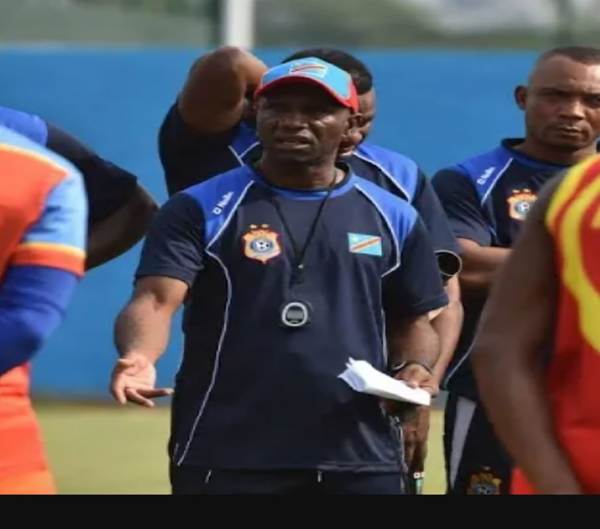
Claude Le Roy’s tenure at the helm of the Congolese national team was short-lived. Following the South African AFCON, he was replaced by former player and 1980 CACC (African Cup of Champions Clubs – now the CAF Champions League) finalist with AC Bilima, Ndiela Muntubile Santos. Santos was a serious contender after winning the inaugural CHAN in 2009. He arrived and left almost immediately. In 2014, Florent Ibenge, then AS Vita Club coach, took over the national team and began the national team foundation building process; a solid base upon which qualitative input from all over would be welcome. It was Ibenge who qualified the national team for the 2015 Africa Cup of Nations. Initially scheduled to be held in Morocco, the Kingdom of Morocco withdrew from hosting the 2015 AFCON due to the Ebola virus pandemic, which was already raging in the Gulf of Guinea countries. Postponing this continental football event was out of the question since sponsors were counting on their merchandise sales during the tournament. Equatorial Guinea, which had co-hosted it with Gabon in 2012, agreed to do so for a second time in the space of three years. Morocco had been suspended from participating in the next two Africa Cup of Nations tournaments (2017 and 2019) until the Court of Arbitration for Sport (CAS) overturned sanctions imposed by the Confederation of African Football (CAF). Furthermore, the CAS upheld the fine imposed on Morocco, reducing it to a maximum of US$50,000.00, payable instead of the initially demanded US$1,000,000.00.
Florent Ibenge, determined to make history and ensuring that people judgments wouldn’t be against him, did call up players ready to wet their jersey for the Equatorial Guinean campaign: Robert Kidiaba (TP Mazembe), Nicaise Kundimbana, Parfait Mandanda, Jean Kasusula, Issama Mpeko, Cedric Mongongu, Joël Kimwaki, Chancel Mbemba, Gabriel Zakwani, Mabele Bawaka, Christopher Oualembo, Cédric Makiadi, Youssouf Mulumbu, Jean Munganga, Lema Ma,bidi, Neeskens Kebano, Herve Kague, Junior Kabananga, Firmin Mubele, Yannick Bolasie, Jérémie Bokila, Cédric Mabwati, and Dieumerci Mbokani. The players who were left out—Lomboto, Distel Zola, Héritier Luvumbu, Lomanisa, Yannick Bangala, and Dark Kabangu—still had merit to prove. But as the saying goes, “the Magister Dixit” (the Master has said) dictates, there was only room for 23 players, alas! The Leopards, under their new coach, were drawn into Group B in Ebebiyin with Tunisia, Cape Verde, and Zambia. While in 2013 in South Africa, DRC was eliminated after three draws in as many games, the same scenario played out in Equatorial Guinea, but with qualification secured this time around. It was a hard-fought victory, as goal difference was unfavourable to Cape Verde, who had the same number of points as the DRC: 1-1 against Zambia, 0-0 against Cape Verde, and 1-1 against Tunisia. Zambia returned home, while Cape Verde was reinstated as one of the best third-placed teams.
In the quarterfinals, the Red Devils of Congo-Brazzaville awaited the Leopards; there was change in coaching system – Claude Le Roy, who had led the Leopards to the 2006 and 2013 Africa Cup of Nations, had been appointed as Congo-Brazzaville’s Red Devils coach. This Pool Malebo derby was also a clash of managers, one European and the other local. The first half was so dull that there was little to report from. At the start of the second half, before the Leopards could even regroup, Doré Fereboy opened the scoring for the Red Devils. Seven minutes later, Bifouma doubled the lead, capitalizing on a Kasusula error, in favour of the Leopards’ neighbours. The Red Devils were hoping to repeat their 1972 triumph in Cameroon, where they were crowned African champions, and they prolonged their evening euphoric nap, only to be disappointed by their fate. Two minutes following Bifouma’s goal, Mbokani opened the scoring for the DRC. Ibenge had read the game and made a cleverly analysed substitution; Kebano replaced Cédric Mapwati to improve tactics in the middle of the park. Kebano responded well; he took control of the ball in midfield alongside Bolasie, who was very comfortable on the left wing, and whose devastating runs were wearing down the defense. Fifteen minutes from time, Bokila scored the equalizer. In the 81st minute, a free kick from Kebano inside the penalty area was headed on by Joël Kimwaki for the DRC’s third goal. The Leopards, who were already on the back foot, had straightened their heads. Heavily criticized before this match, Mbokani, who had broken away, found himself one-on-one with the Brazzaville goalkeeper. He unleashed a thunderous shot that Christopher Mafoumbi parried, but Mbokani’s follow-up left Mafoumbi with no chance. It was the Leopards’ fourth goal and Mbokani’s second of the game. Ironically, it was the Leopards who were celebrating in the hellish atmosphere surrounding the Red Devils. The Leopards recorded a 4-2 win.
The team, now coached by Florent Ibenge, had reached the semi-finals, 17 years after Burkina Faso 1998. Their next opponents were Ivory Coast, the eventual African champions. Although the Ivorian Elephants’ star player, Didier Drogba, was not part of the Equatorial Guinea campaign, Maestro Zokora, captain Yaya Touré, Gervais Kouassi Kouadio, Serge Aurier, the late Tioté, Assale (who would later play for TP Mazambe), Kalou, and Bony were all present. On February 4, 2015, at the Estadio de Bata in Bata, international referee Sidi Alioum called the two teams to the center circle for kickoff. Ivory Coast was the first to get on the scoreboard through Yaya Touré in the 20th minute. Four minutes later, Dieumerci Mbokani equalized for the DRC before Gervinho doubled the lead for the Ivorians, four minutes before halftime. In the 68th minute of the game, Wilfried Kanon increased the score in favour of Ivory Coast, 3-1 for the Ivorian Elephants at the end, and the game was over.
In the third-place game – the losers’final, the host country, Equatorial Guinea, faced the Democratic Republic of Congo (DRC). At the end of regulation time, the two teams were still deadlocked, and the game ended in a goalless draw. Since there is no extra time in this type of fixture, a penalty shootout was inevitable. DRC is no stranger to this format, having gone through it 17 years prior, but the Nuevo Estadio in Malabo is not the Stade du 4 Août in Ouagadougou. On February 7, 2015, DRC’s Leopards converted all their kicks (Mapwati, Mabidi, Mbemba, and Mongungu), while Balboa and Fabiani missed theirs, leaving Juvenal and Ellong to score theirs, resulting in a 4-2 penalty shootout victory.
The Leopards won bronze for the second time after 1998; Dieumerci Mbokani was the joint top scorer with 3 goals, alongside Thievy Bifouma. Both Congolese, one from each side of the Congo River. The Pool Malebo tournament had further narrowed the gap between the two countries in terms of the top scorers – no antagonism as it was a Central African affair; Equatorial Guinea being also a member of the ECCAS, it was all fair game.


More Stories
Back to the Future: DRC Performances at the Africa Cup of Nations – AFCON Finals (End)
Back to the Future: DRC Performances at the Africa Cup of Nations – AFCON Finals (continued)
Back to the Future: DRC Performances at the Africa Cup of nations – AFCON finals (continued)