

Gabon 2017 for the 31st Edition of the Africa Cup of Nations
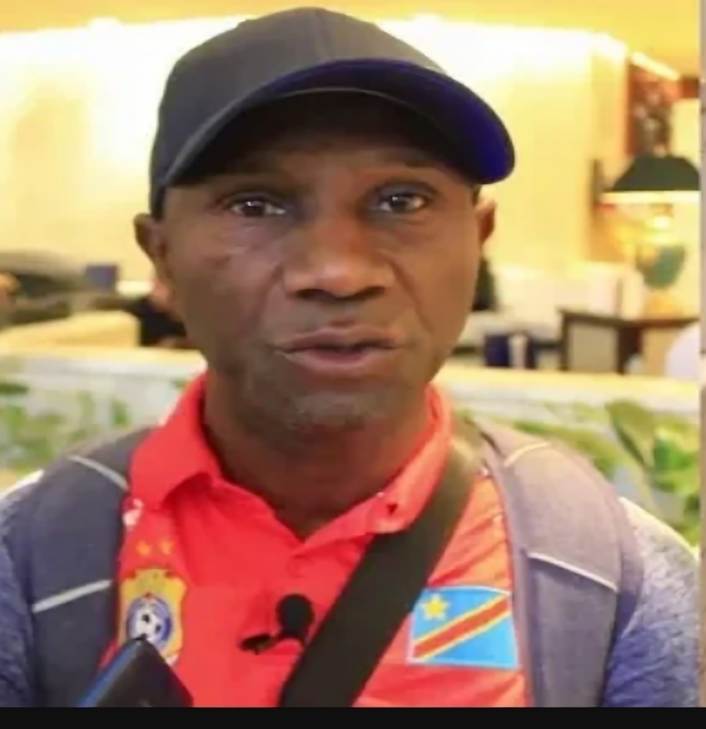
The two countries that jointly hosted the 2012 AFCON were once again ready to host the continental football festival again. Equatorial Guinea, which had hosted the 2015 AFCON, passed the baton to its Gabonese neighbour to reiterate the same in 2017. For the Leopards, Ibenge made a strong impression by helping DRC reach the ranks of medal-winning teams at the AFCON, during his first AFCON as a coach in 2015. Florent became the second Congolese to achieve this feat after the late Louis Watunda in 1998 in Burkina Faso, and the first while coaching a club. Ibenge wore two hats; as coach of the Leopards (the national team), he was also the manager of AS Vita Club, whom he led to the final of the African Champions League in 2014 against ES Sétif of Algeria. In that same year, 2017, after the Africa Cup of Nations in Gabon, Florent Ibenge qualified AS Vita Club for a second CAF interclub competition final – the CAF Confederation Cup against Raja Casablanca. Each time, AS Vita Club lost the final against these North African clubs. Such performance demonstrates the dominance of North African football compared to the rest of Africa.
At the 2017 Africa Cup of Nations, Kiassumbua, Matampi, Bope Merveille, Lomalisa, Ikoko, Tisserand Marcel, Fabrice N’sakala, Mulumba Remy, Mpoku José, Maghoma Jacques, Mubele, Bakambu, and Bolingi were selected to replace some key players who had participated in the previous edition. However, the majority of the 2015 squad was retained, save for the iconic goalkeeper Kidiaba, who had hung up his boots. The Leopards were drawn into Group C alongside Morocco, Togo, and Ivory Coast in Oyem. Against Morocco in their first round second match of this group, DRC had a crucial result to achieve; Hervé Renard, who had won the title with Ivory Coast in 2015, had defeated Ibenge in the semi-finals of that Equatorial Guinean AFCON. Today, Morocco’s coach faced the same Ibenge, a clash of titans. Morocco dominated the first half without success. After the break, it took a good ten minutes for the first attack of the second half to materialize. Mubele broke free down the left and finished his run with a superb cross in front of goal. Moroccan defender Kajoui parried the ball onto his post, before it miraculously fell to Junior Kabananga, who volleyed it home with an acrobatic finish 1-0, in the 55th minute. Even Lomalisa’s sending-off, 16 minutes after coming on as a substitute, didn’t spoil the Leopards’ party, as they secured a narrow victory. In the second game, Ivory Coast Elephants of awaited the Leopards, just as they did it in the semi-final of the previous edition. In the 10th minute, Neeskens Kebano gave the Leopards a 1-0 lead, but the Elephants equalized 16 minutes later through Bony. As against Morocco, Kabananga scored his second goal of the tournament and his second of the game, two minutes after Bony’s goal. The score remained 2-1 at halftime and remained so to the end. So two years later, Ibenge had avenged his defeat against Hervé Renard, and the Leopards avenged theirs against the Elephants. At the close of the group stage in Port Gentil, Togo’s Sparrow hawks, led by Sheyi Adebayor, were the DRC’s Leopards next opponents. Who else but Kabananga to provide the spark? He scored the first Congolese goal, and the halftime whistle blew with the score at 0-1. Nine minutes after the restart, Mubele scored the Leopards’ second goal before M’Poku extended the lead 10 minutes from time with a masterfully executed free kick. Togo had reduced the score gap through Laba to make it 1-3 at the final whistle. DRC topped the group, followed by Morocco, while the defending champions, Ivory Coast, and Togo were eliminated.
Ghana’s Black Stars were a formidable force against the Leopards in the quarter-finals. In the first half, the game was marked by poor finishing, exemplified by Mbokani, who, after capitalizing on a misplaced pass from a Ghanaian defender in the box, dribbled past the goalkeeper only to see his shot strike the post with the goal gaping. After withstanding the Congolese onslaught, Ghana regained their composure when Jordan Ayew punished the Leopards’ hesitation in the 63rd minute, opening the scoring. Just four minutes later, the Leopards levelled the score. From a quickly taken free-kick, Mpoku unleashed a rocket into the top corner of the Black Stars’ net to equalize in the 67th minute. DRC thought they had been awarded a penalty when Kabananga was clearly fouled in the box, but the referee waved play on. Instead, it was Ghana who were awarded the penalty. Christian Atsu went down in the Congolese penalty area after a clash with Lomalisa. André Ayew, captain in the absence of Asamoah Gyan, who remained on the bench, converted the penalty, securing Ghana’s victory 12 minutes from time. The final score was 2-1. The Leopards were unable to repeat their Malabo triumph. Eliminated, they returned home to prepare for future competitions while nursing the wounds of this disappointing result.
Egypt 2019 for 32nd edition of the Africa Cup of Nations
This is the first AFCON without the late Issa Hayatou since 1988 as president of the governing body of African football. Shortly before the final phase of the Africa Cup of Nations in Morocco that same year, following a vote, Issa succeeded the Ethiopian Yednakatchew Tessema, who had died in 1987. The Malagasy Ahmad Ahmad was now at the helm after defeating the Cameroonian Issa in the CAF presidential election. Malagasy Football Federation former president and former Minister of Sports, Ahmad had assumed the mission of “supposedly” restoring the CAF’s image. However, it was financial improprieties within the CAF treasury, coupled with other scandals, which landed him in jail in France. Ahmad strayed too far from the mission he had set for himself upon taking office.
The new CAF head inherited the 2019 Africa Cup of Nations finals whose hosting rights were awarded to Cameroon, Issa Hayatou’s country. Ahmad Ahmad’s takeover triggered an initial upheaval regarding the number of countries qualifying for the next Africa Cup of Nations (AFCON) finals. The CAF Executive Committee, under the new president’s influence, ratified the decision to increase the number of qualified countries. Instead of 16, 24 countries would participate in the finals. This approach was rejected by his predecessor, who cited a lack of sport facilities as a major stumbling block to hosting a 24-team AFCON in most of African countries. He mentioned only Morocco, Egypt, and South Africa as being capable of hosting a 24-team tournament. For Cameroon, the schedule of specifications outlined requirements for a 16-team AFCON, not a 24-team one. Changing the rules mid-game was not to the liking of either the Cameroonians or the experts – a decision made hastily. Yet Ahmad knows full well that African football is so financially dependent on governments’grants that disrupting a set of specifications mid-project would make it impossible to complete the work in real time. This is precisely what happened – Cameroon was no longer able to meet the new specifications required to accommodate the upcoming Africa Cup of Nations (AFCON). The Confederation of African Football (CAF) decided to award Egypt the hosting rights for the 2019 AFCON and Cameroon the 2021 edition.
For the 2019 Africa Cup of Nations finals, scheduled from June 21 to July 19 in Egypt, Florent Ibenge retained his mentorship at the helm of the Congolese national team. His squad included players who had participated in Gabon’s 2017 campaign. Among the new additions were Britt Assombalanga, son of former Bilima – Dragons striker Assombalanga, and Jacques Maghoma, both of whom were playing in England at various levels of the league. The veteran Trésor Mputu was included at the last minute. The Leopards were placed in Group A with the host country, Egypt, Zimbabwe (who had defeated them at the Stade des Martyrs in the qualifiers for this AFCON), and Uganda – coached by the current DR Congo coach, Sébastien Desabre. DRC kicked off its campaign against Desabre’s Uganda on June 22, 2019, at Cairo International Stadium. In the 14th minute, the Leopards were met with a cold reception from the Ugandan Cranes, who opened the scoring through Kudu. DRC’s poor performance offered no glimmer of hope as the Ugandans clearly controlled the game. This was confirmed in the 48th minute when Okwi doubled the Cranes’ lead. Stunned, the Leopards left the stadium with their tails between their legs at the final whistle.
South African referee Victor Gomes officiated the Leopards’ second game against Egypt’s Pharaohs four days later, on June 26, 2019. Football pundits and experts predicted a strong showing from the Leopards against the host nation. Thirteen years earlier, Egypt and the DRC had met in the round of 8 of the 2006 Africa Cup of Nations in Egypt. Hossam Hassan and Ahmed Hassan’s team had stunned the Leopards (then known as Simbas) on their way to victory. Would spectators and television viewers witness a revenge match from the Leopards? Not at all! Elmohamady silenced the Congolese spirit by opening the scoring for Egypt in the 25th minute before Trezeguet Salah doubled the lead in the 43rd minute. The score remained unchanged until the final whistle. Had the number of participating teams remained at 16, the Leopards would have had to bid farewell to this AFCON after their second consecutive defeat. The expansion to 24 teams offered a slim window of opportunity to qualify; the Leopards needed to defeat Zimbabwe and hope to be among the best third-placed teams or the best losers. At 30 June Stadium in Cairo on June 30, 2019, the Leopards had a date with destiny. Since his appointment as DRC coach, Florent Ibenge had never been eliminated from the AFCON in the first round, and the Egyptian tournament could not be a stain on his illustrious career at the helm of the Congolese national team. As the game entered its 4th minute, Bolingi, son of Merikani Mpangi, the Leopards iconic goalkeeper at the 1988, 1992, and 1996 Africa Cup of Nations, opened the scoring before Bakambu doubled the lead 30 minutes later. Halftime arrived with the score at 2-0 in favour of the Congolese team. In the dressing room, Ibenge gave his players a stern talking-to, warning them not to become complacent with this scoreline. They needed to improve their goal difference to have any hope of securing third place and qualifying as one of the best losers. 20 minutes after the restart, Bakambu added another goal through penalty. With 12 minutes remaining, Assombalonga completed the rout with a fourth goal. 4-0 for the Leopards, was the final score.
A huge sigh of relief! The Leopards managed to secure a respectable position in Group A. In three games, they lost two and won one, earning a total of three points with four goals scored and four conceded, resulting in a goal difference of 0. Ultimately, the Leopards finished as the second-best third-placed team after Guinea, followed by Benin and South Africa – the four best third-placed teams in this inaugural 24-team AFCON.
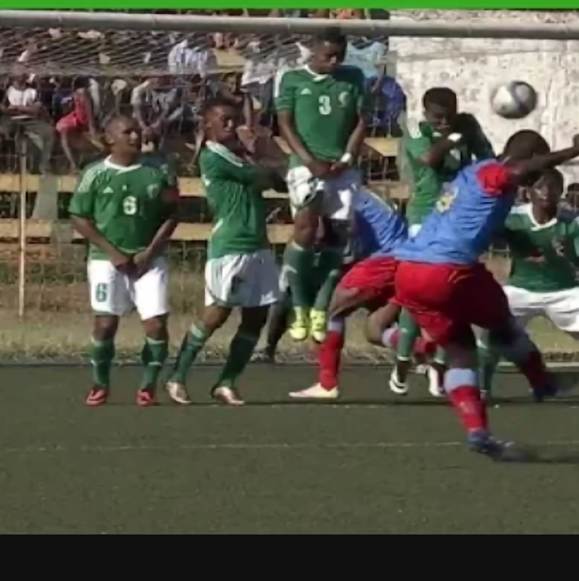
In the Round of 16, DRC faced Madagascar – CAF president home country. His first vice-president at CAF was none other than Constant Omari, the president of the Congolese Football Association. On July 7, 2019, at the Alexandria Stadium, the Barea of Madagascar were determined to upset the Leopards. The incredible adventure continued for Madagascar, who had qualified for the Round of 16 at the Africa Cup of Nations in their first-ever appearance. The start of the game was marked by a fierce desire to win from the Malagasy players, with their compatriot and CAF president, Ahmad Ahmad, watching from the stands. Amada certainly wouldn’t disagree! The midfielder arrived like a rocket to unleash a thunderous shot twenty meters from goal, the ball nestled into the top corner, leaving Matampi helpless. 1-0 for the Barea. It was in the 9th minute. But the Leopards’ stealth wasn’t tested for long. In the 21st minute, Muzinga’s magnificent cross found Bakambu at full speed. The Congolese striker headed the ball across goal, beating Adrien for the equalizer. After the break, it wasn’t until the 79th minute that Madagascar extended their lead. Andriatsima waited for Metanire’s attacking runs down the right flank to finish the move, heading the ball home past a desperate Matampi. Madagascar led 2-1. In the final minute of regulation time, Chancel Mbemba stole the show from the Malagasy side, from a Meschack corner whipped in at the far post, the international defender headed home a powerful effort for Congo’s second equalizer. The score was 2-2 at the end of regulation time. The 30 minutes of extra time yielded nothing, as the score remained unchanged. It was down to the dreaded penalty shootout. Marcel Tisserand and Bolasie missed their shots, while the Barea converted theirs. The 4-2 penalty shootout victory secured Madagascar’s first-ever round of 8 appearance in their first-ever Africa Cup of Nations finals.
This Congolese elimination brought an end to an epic run; it was Florent Ibenge’s DRC last Africa Cup of Nations which marked the end of their international careers for many players too.


More Stories
Back to the Future: DRC Performances at the Africa Cup of Nations – AFCON Finals (End)
Back to the Future: DRC Performances at the African Cup of Nations – AFCON Finals
Back to the Future: DRC Performances at the Africa Cup of nations – AFCON finals (continued)